Vulnerable groups and sports
In today’s world, sport plays a multifaceted role that extends far beyond physical activity and competition. It is increasingly viewed as an important component of social life that can promote integration, education and the development of social capital. The academic literature emphasises that sport is a space in which social relationships, norms and values – such as cooperation, solidarity and the principles of fair play – are shaped. At the same time, it is not free from mechanisms of exclusion that reflect the wider social inequalities present in a given society. According to the framework proposed by Pierre Bourdieu, sport can serve as a tool for reproducing social structure, as access to certain forms of physical activity depends on one’s economic, social and cultural capital.
Social exclusion in sport refers to situations in which individuals or social groups have limited opportunities to participate in physical activity or in the organisational structures of sport. These barriers may be material, symbolic or institutional in nature. In practice, this means a lack of access to sports infrastructure, training programmes that are not tailored to the needs of specific groups, and the existence of stereotypes and prejudices that discourage participation. As a result, instead of serving an integrative function, sport may contribute to exacerbating social inequalities. At the same time, it should be emphasised that sport has significant inclusive potential, as it enables the building of social bonds, the development of interpersonal skills, and the strengthening of a sense of belonging to a community. However, to realise this potential, it is essential to consciously design sports activities and create conditions that promote equal access.
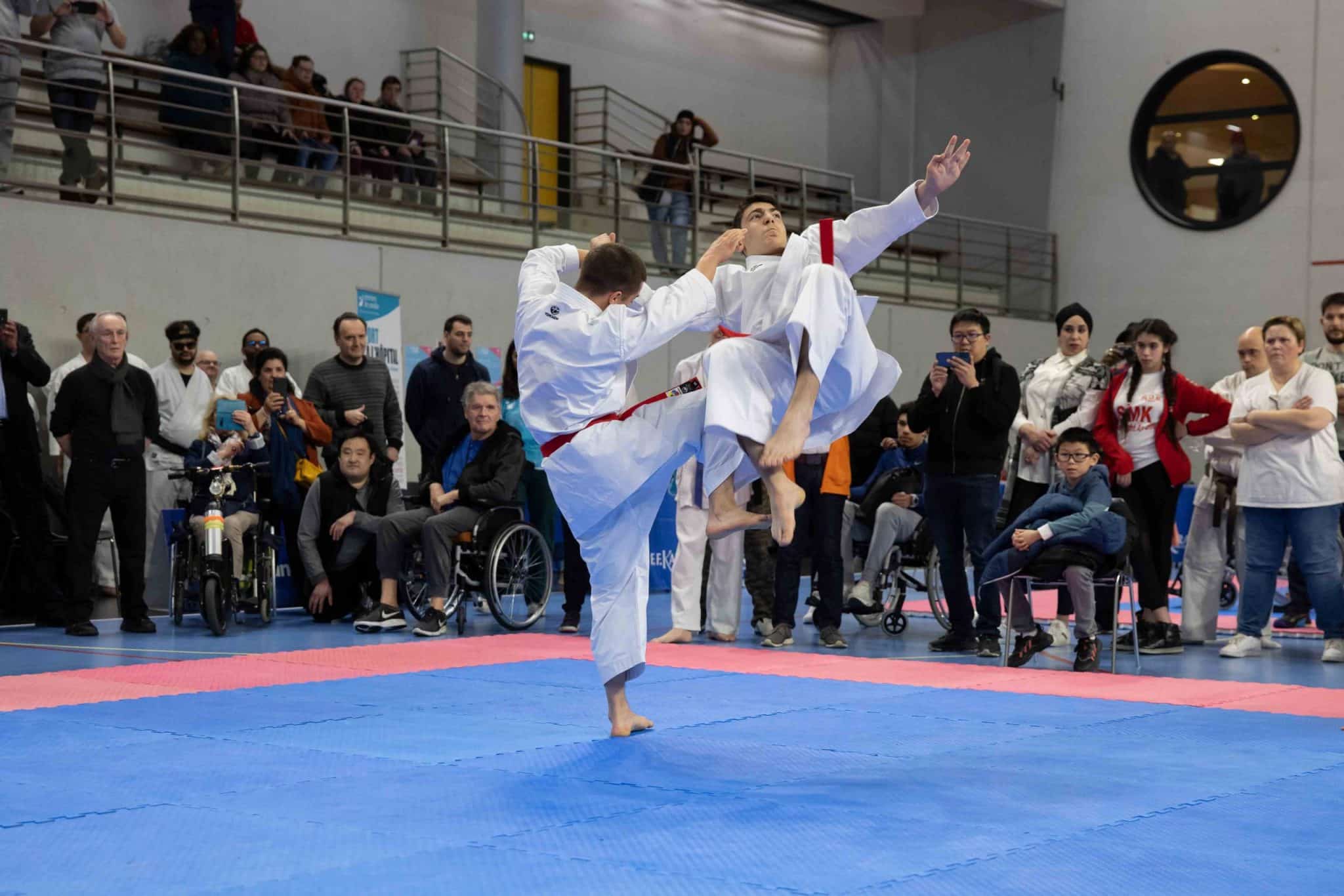
Among the groups particularly at risk of exclusion in sport, people with disabilities occupy a significant place. Their participation in physical activity is often limited by architectural barriers, a lack of adapted equipment, and insufficient competence on the part of coaches to work with people with diverse needs. In addition, social stereotypes play a significant role, which can lead to the marginalisation of this group and limit their opportunities for sporting development. At the same time, research indicates that physical activity has a particularly positive impact on the physical and psychosocial development of people with disabilities, making inclusion in sport one of the key areas of social policy.
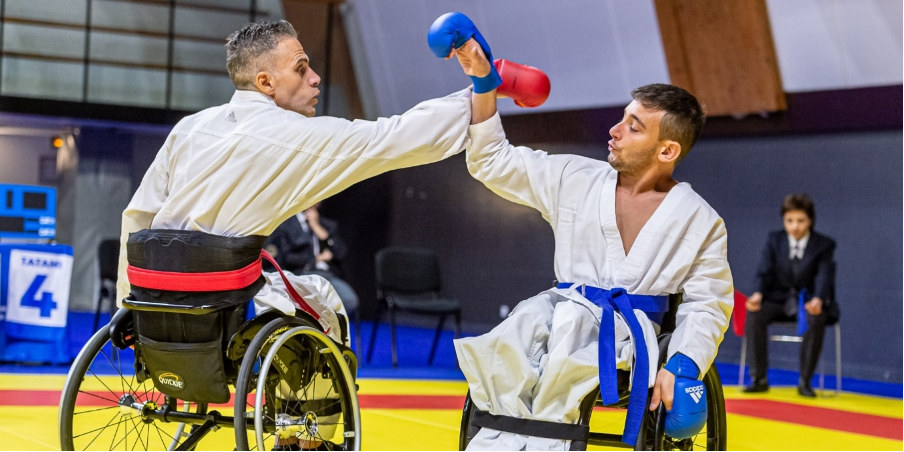
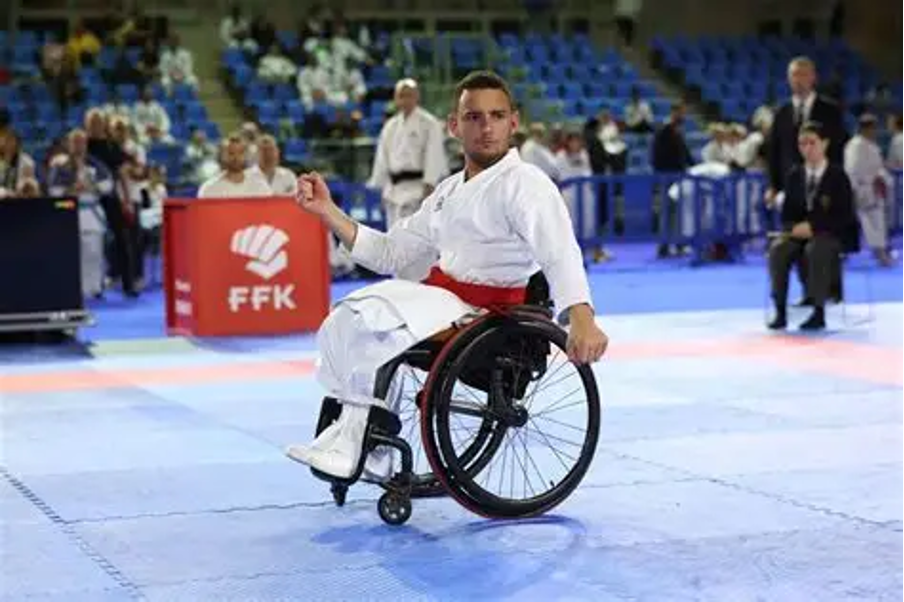
Sources: https://www.ffkarate.fr/le-para-karate-sur-le-devant-de-la-scene/
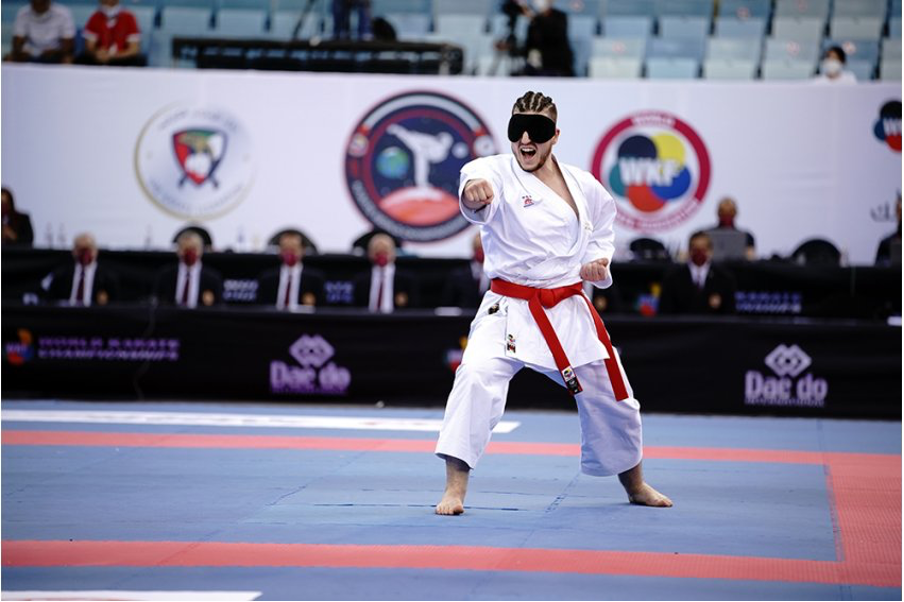
Sources: https://www.ffkarate.fr/wp-content/uploads/2023/02/FFK107-scaled.jpg
Another group at risk of exclusion is women and girls, whose participation in sport in many countries remains lower than that of men. This phenomenon is due, among other things, to entrenched gender stereotypes that assign certain sports disciplines to one gender, as well as to lower institutional and financial support for women’s sport. In the case of combat sports such as karate, these stereotypes can be particularly strong, as these disciplines are often perceived as requiring physical strength and aggression, which, in traditional cultural terms, are attributed to men.
Economic status is also a significant limiting factor in access to sport. Participation in organised sport involves numerous costs, including membership fees, the purchase of equipment, participation in competitions, and transport costs. For individuals from lower-income families, these barriers can be difficult to overcome, leading to their exclusion from sporting activities. As a result, sport becomes a selective space, accessible primarily to those with the necessary financial resources.
Exclusion from sport also affects migrants and members of ethnic minorities, who face linguistic, cultural and social barriers. Lack of language skills, difficulties in adapting to new social norms and limited access to social networks can significantly hinder participation in sporting activities. At the same time, sport can be an important tool for integrating migrants, enabling them to form relationships and develop a sense of belonging to the local community.
Problems with access to sport are also evident among residents of peripheral areas, where sports infrastructure is less developed and the number of sports clubs is limited. Similar difficulties affect older people, for whom the range of sports on offer is often not tailored to their needs and capabilities. As a result, these groups may experience marginalisation within the sports system, despite the fact that physical activity plays an important role in maintaining health and quality of life.
In response to the problem of social exclusion in sport, numerous inclusive initiatives are being developed. Programmes run by organisations such as Special Olympics and initiatives supported by the International Olympic Committee focus on ensuring equal access to physical activity and creating an environment that encourages the participation of different social groups. Initiatives such as ‘Sport for Development’, which use sport as a tool for social development, education and combating marginalisation, play a particularly important role. However, it should be noted that the effectiveness of these programmes is not automatic and depends on numerous factors, such as the social context, the way activities are organised, and the level of involvement of public institutions.
Against the backdrop of general considerations on social exclusion in sport, an analysis of karate, as one of the world’s most popular martial arts, is of particular importance. Karate, rooted in Asian traditions, combines elements of physical activity, philosophy and a value system based on respect, self-discipline and personal development. Despite these positive aspects, mechanisms of exclusion can also exist within this discipline.
One of the main barriers to participation in karate is economic factors. The costs associated with purchasing training attire (gi), paying for training sessions, taking exams for higher grades and participating in competitions can represent a significant barrier for individuals with lower financial means. As a result, access to this form of activity may be unequal, leading to the selection of participants based on their financial means.
Infrastructural barriers are also significant, particularly in smaller towns and rural areas, where the number of karate clubs is limited. The lack of access to suitable sports facilities and qualified coaching staff hinders the development of the sport and limits opportunities for participation for the local community.
Cultural barriers also play a role. The stereotypical perception of martial arts as ‘male’ disciplines may contribute to lower levels of female participation, even though, in reality, karate does not require superior physical strength but is based on technique, coordination and body control. Challenging these stereotypes poses a significant challenge for sports organisations and coaches.
The unique nature of karate, as a system based on a hierarchy of student and master grades and clearly defined dojo operating rules, has an ambivalent impact on the inclusion process. On the one hand, this structure fosters motivation, a sense of belonging and personal development; on the other hand, it can act as a barrier for those who are unable to meet the organisational or financial requirements associated with the subsequent stages of training. In this context, karate can both promote social integration and contribute to the reproduction of inequalities.
At the same time, martial arts, including karate, possess significant potential for integration. Training sessions help to develop self-control, responsibility and respect for others, which is particularly important when working with children and young people. Inclusive programmes, such as para-karate, developed by the World Karate Federation, are also playing an increasingly important role, enabling people with disabilities to actively participate in training and sports competitions. Furthermore, karate is used in therapeutic activities, supporting the social and emotional development of participants.
The process of inclusion in karate can be understood as dynamic and multi-stage, encompassing both the provision of access to sporting activity and the gradual integration of participants into the club environment. Public institutions, sports organisations and coaches play a key role in this process, and they should possess the appropriate skills to work with socially and culturally diverse groups. It is also important to develop programmes that support the participation of people from groups at risk of exclusion, such as children from low-income families or people with disabilities.
In conclusion, sport is an important tool for social integration, but its potential is not automatically realised. Existing economic, cultural and infrastructural barriers can limit access to sporting activities and lead to the exclusion of certain social groups. As a sport, karate reflects these processes, combining both elements that promote inclusion and mechanisms that can lead to marginalisation. Therefore, it is necessary to take deliberate action to increase the accessibility of this form of activity, including the development of inclusion programmes, institutional support and public education. Only then will sport, including karate, be able to fully fulfil its role as a tool for building a more equal and inclusive society.
References
- Bourdieu, P. (1979). La distinction: critique sociale du jugement. Paris: Les Éditions de Minuit.
- Collins, M., & Kay, T. (2003). Sport and Social Exclusion. London: Routledge.
- Coalter, F. (2007). A Wider Social Role for Sport: Who’s Keeping the Score? London: Routledge.
- Jakubowska, H. (2018). Sport as a Means of Social Inclusion and Exclusion.
- Marivoet, S. (2014). Challenge of Sport Towards Social Inclusion and Awareness-Raising Against Discrimination.
- Schulenkorf, N., Sherry, E., & Rowe, K. (2016). Sport for Development: An Integrated Literature Review.
- Morgan, H., & Parker, A. (2017). Youth Sport and Social Inclusion.
- Spaaij, R. (2015). Sport and Social Exclusion in Global Society.
- Dyer, S., & Standford, H. (2023). Social Inclusion in Sport for People with Disabilities.
- Ciaccioni, S. et al. (2025). Combat Sports and Wellbeing: Advancing Health and Inclusion.
- Maussier, N. et al. (2025). Judo and Karate in Primary School as a Means for Improving Social Inclusion for Autistic Children.